Up the Bay: Solomons Island, Oxford, St. Michael's
Updated: Apr 24
Leaving Smith Island, even at low tide, proved easier than arriving. Good light highlighted the shoals and shallows and our new-found familiarity with the island's bubba sticks helped us slowly and safely wind our way out the channel onto Chesapeake Bay. Following a calm crossing, we arrived at Solomons Island Yacht Club where two men of a relatable age welcomed us. After helping us tie up, both Jim and Doug apologized that they could not invite us to dinner. It turns out one of the club's members was sponsoring a members' only Moroccan dinner with live belly dancing. Still, they offered to do anything they could for us--grocery store runs, West Marine trips, whatever, but we were in good shape. Until. . . , we hooked up our shore water hose.
The shore water inlet valve failed and water squirted all over the cockpit and all over me. Boats are made to get wet and sweet though I am, I don't melt from exposure to water. No harm done. And, I even had a replacement inlet on board left over from a project on our Back Cove 41 which turned out not to need it. The only challenge: Sabre had used an ungodly amount of marine sealant behind the inlet which had hardened over the last six years to near steel strength. I didn't have the tools to get the old one off. Of course it was Saturday; we'd have to wait until Monday to find someone to help. I topped up Katahdin's internal freshwater tank and promised the Admiral I'd keep it full until we had the repair done.
Jim and Doug warned us that the gray, rainy, cool evening was nonetheless opening day for the next door Tiki Hut and Grill, a regional tradition that attracts live bands and as many as 9-10,000 people--a huge challenge in a town with a population barely reaching 2000. Perhaps showing our age, the music seemed not only loud but truly horrible. The rain kept the crowd down and though the streets and sidewalks were busy, our escape to dinner at a restaurant a few blocks away proved straightforward.
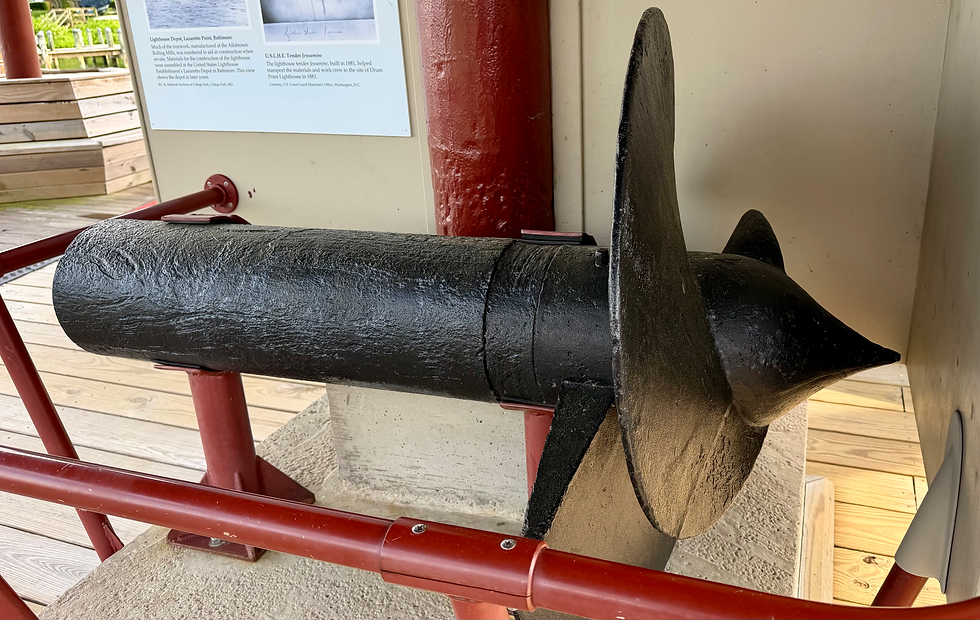
For me, the Calvert Marine Museum highlighted our stay on Solomons Island. The museum featured a wide variety of exhibits but the tour of the relocated Drum Point Lighthouse was most enchanting. One of forty something screw pile lighthouses originally built on the Bay, the Drum Point Lighthouse was moved by barge to the Calvert Marine Museum in 1975. The lighthouse sat on seven screw piles. Originally in

about 10 feet of water. workmen "screwed" these augur tipped piles with a capstan bar from aboard a barge. They had to go at least 10 feet down into the mud. It must have been demanding and tiring work.
The lighthouse tour was informative and the period re-creation seemed authentic. One thing in particular caught my eye--the ice box below. When I was a young boy,
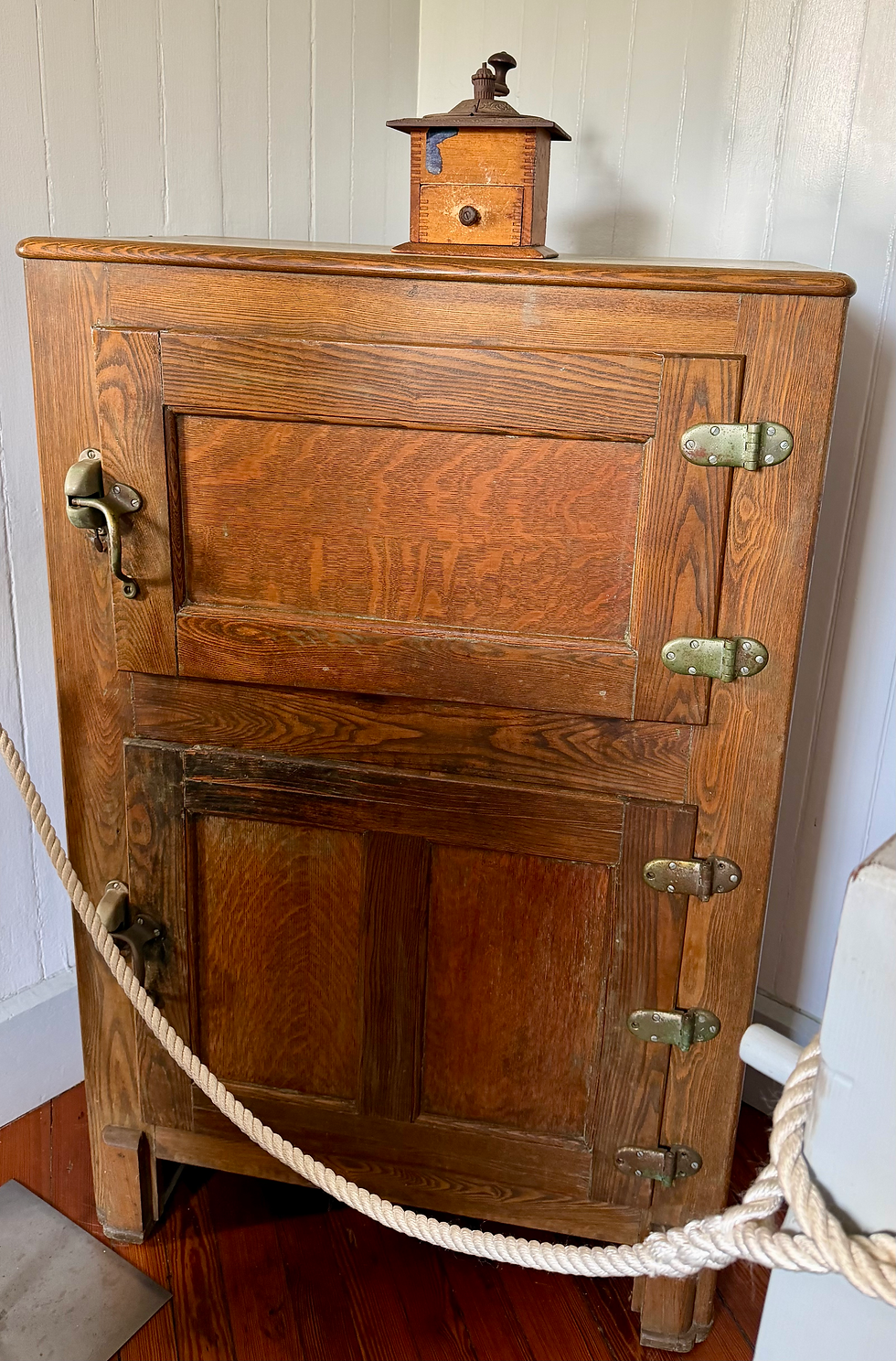
my Grandmother Hewett had this exact icebox in her camp. She still used it when I was very young. After she got an electrified fridge, the icebox functioned as a cupboard for many more years. Oh how I wish I had it today. I also vividly remember the ice man coming to my Grandmother Ludwick's house on Chestnut Street in Rockland in the early 1950s. As a little boy on a hot summer day, I couldn't wait for him to arrive and give me a few ice chips. What a pleasurable memory!
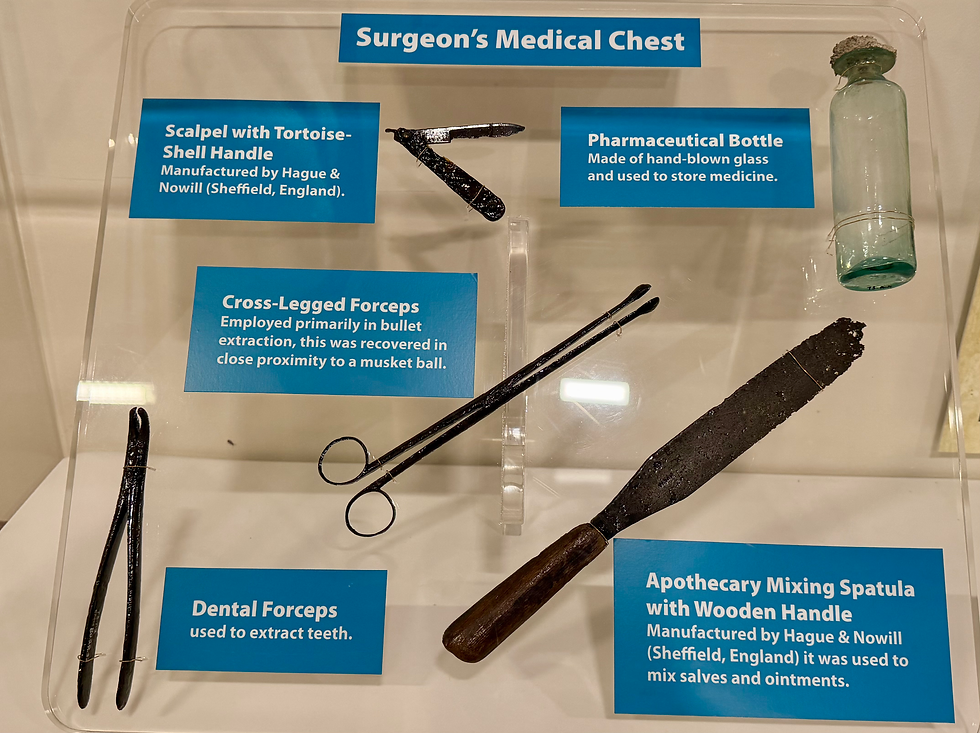
The museum offered much more than I'll be able to tell you about but I'll quickly share a few more things. Below are the contents of one ship's surgeon's medical chest. This assortment attracted my attention. It's almost the exact same kit that we carry on Katahdin!
Of course, oysters factor into any story of Chesapeake. Did you know that oystering didn't take off here until New England and especially Maine's oyster beds were nearly depleted? J.C. Lore was the primary packer at Solomons Island and the Museum


owns the former packing house which sadly was closed during our visit.
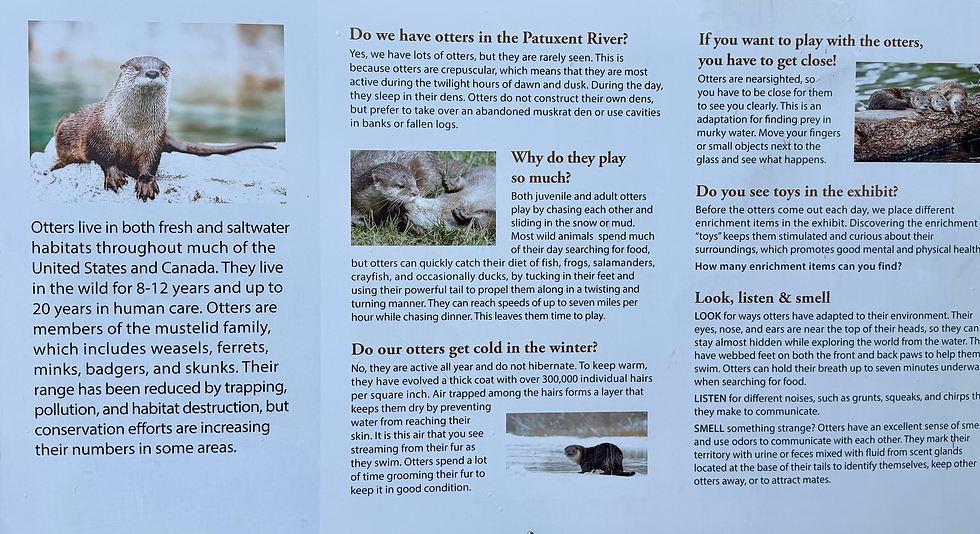
The museum also showcased many types of bay boats, marine paraphernalia, aquariums, and even river otters. Though they proved impossible to photoghraph, the two rescue river otters offered great entertainment as they played, fought, pushed and shoved.

Monday morning came and, at 08:00 sharp, I got on the phone looking for someone to help us replace the shore water inlet. Safe Harbor Oxford where we would spend the night was behind in its work because of a travel lift that had been down and couldn't help. But, DiMillo's Chesapeake East, just around the corner from them, asked how soon we could be there. Two and a half hours later after a first pounding and then rock and rolly Bay crossing, we pulled into DiMillo's. Service Manager, Bill, immediately climbed on board, sized up the job, came back with tools, and got started. A half hour later we
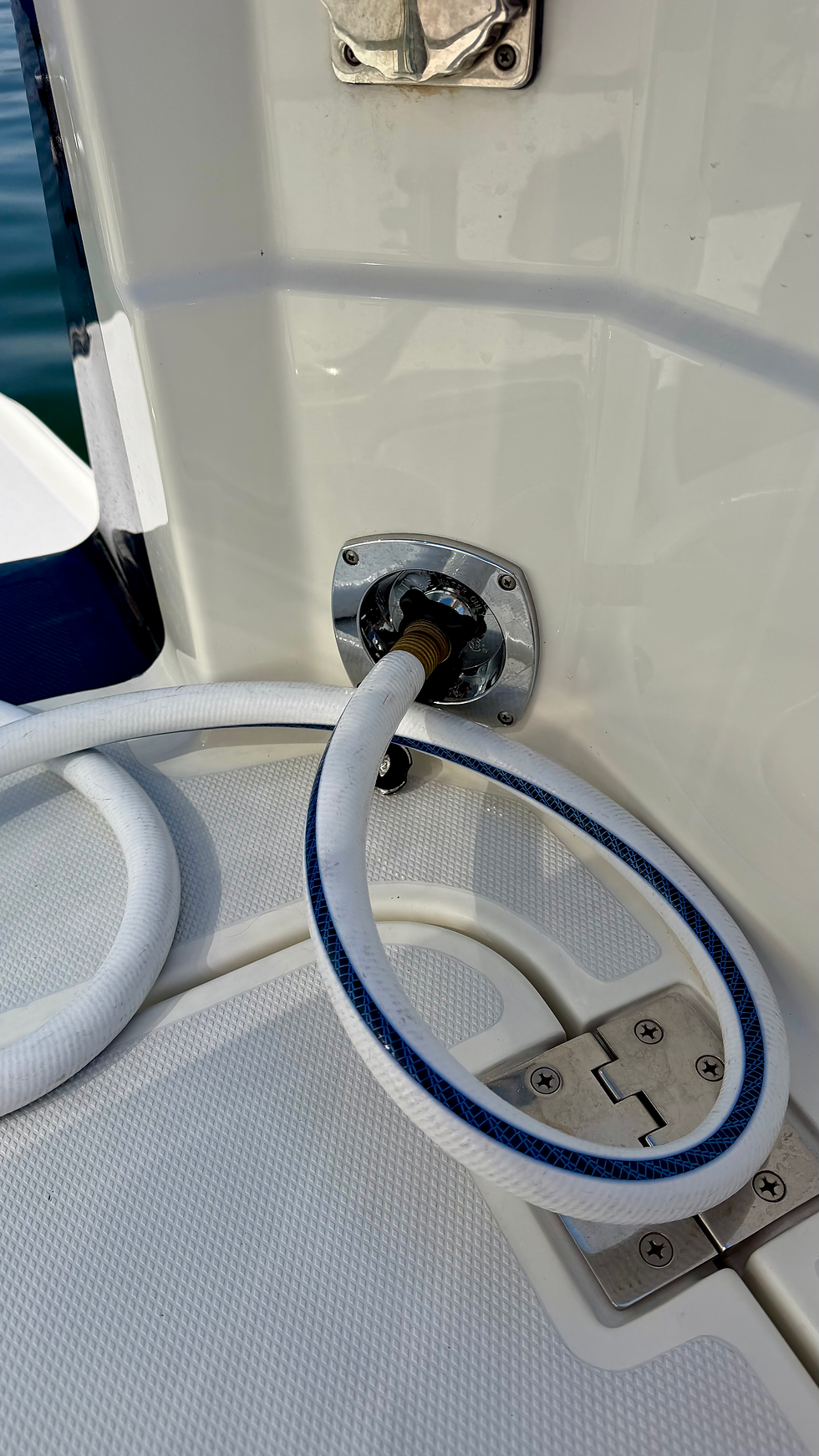
had our new inlet installed, had paid the modest bill, and made our way along the short distance to Safe Harbor Oxford where we arrived in a squall that soaked both the Admiral and me.
Oxford, a small, historic village, is still very quiet in April with nothing open except a small local market. We enjoyed a long walk, a pleasant supper on the boat and an early evening.


Tuesday morning we headed to Tilghman Island Marina located at the far end of Knapp Narrows. After navigating the Knapp Narrows Swing Bridge, we found the marina but the face dock we'd been assigned was far too rough and exposed for our taste. We decided to head on to St. Michaels, a larger eastern shore town with a terrific harbor. Along the entire route, we encountered Osprey pair after Osprey pair, most pairs collaboratively building nests. I'm sure she was telling him how to make it just so.
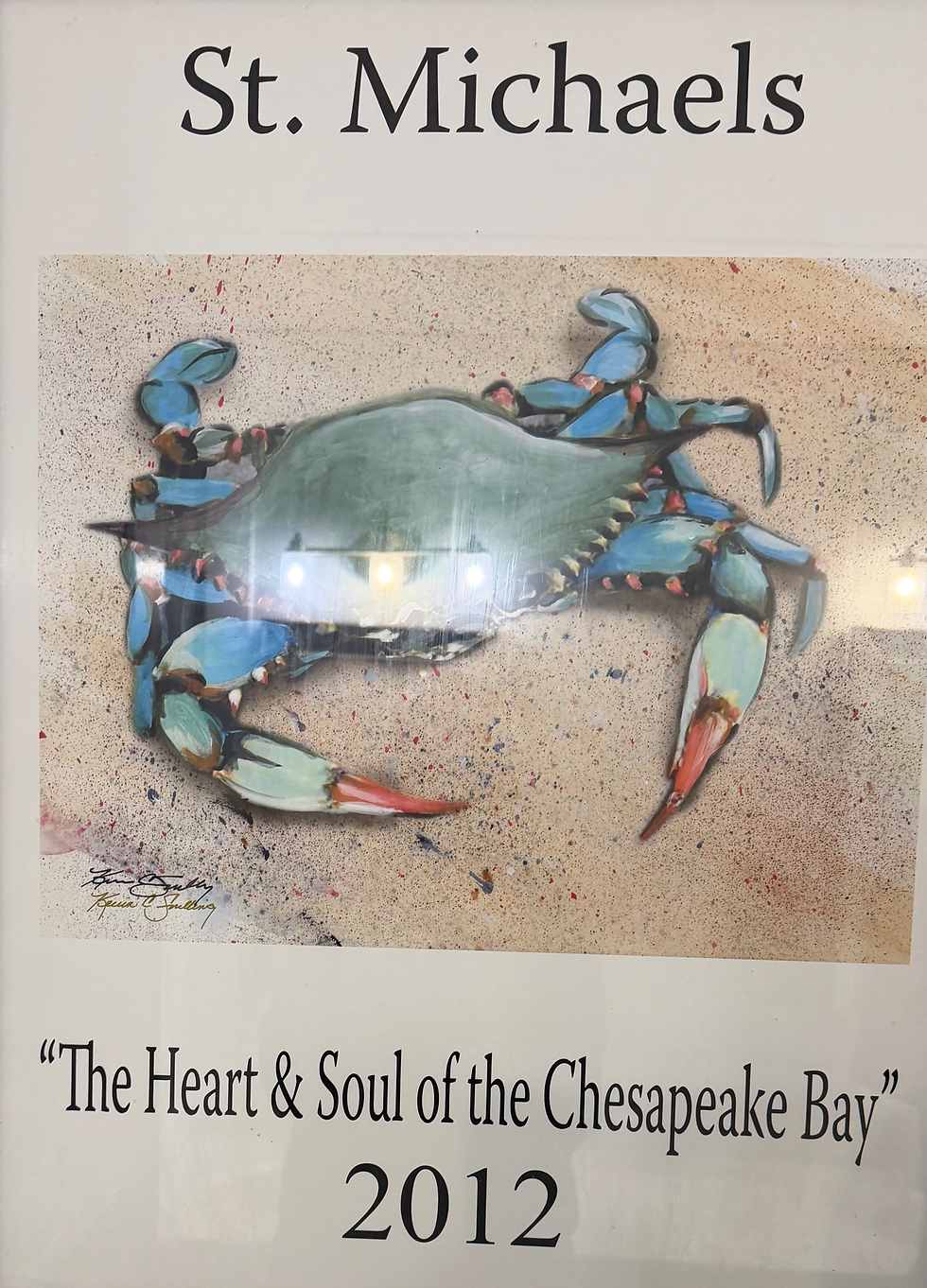
St. Michaels is a larger and more vibrant town than we've been in since Norfolk. It offers shops for the Admiral, a variety of upscale restaurants, a spa where the Admiral enjoyed a massage, a lot of historic homes, and the very active Chesapeake Bay Maritime Museum or CBMM. It is this last that I'll close out this blog with.
The CBMM offers a large campus with a dozen or more buildings, a half dozen docks, and a lot going on. Like the Calvert Marine Museum on Solomons Island, it features a

screw pile lighthouse, in this case relocated from Hooper Strait. Unlike the Calvert Museum where access was only by organized tour, however, the CBMM allowed you to wander through the lighthouse at your leisure and I had it all to my self which gave me a chance to take some pretty cool pictures. .
The Fresnel lens was invented in 1822 and immediately spread throughout Europe as the lighthouse lens of choice because of its ability to cast a bright beam. But, because of its expense, the US was slow to adopt it. By the time the Hooper Strait Lighthouse was built in 1879, though, it was outfitted with a fifth order Fresnel lens.

On the Chesapeake, some lighthouses had horns while others, such as the Hooper Strait and Drum Point lighthouses had bells. These bells had a fog striker which gave each bell a unique ring such as two rings every 15 seconds. A six hundred pound weight was raised to the floor level of the striker and then, through gearing and gravity, would falll to the bottom of the light house over the course of two hours when it would have to be cranked back up. As inclement weather approached, the lighthouse keeper would
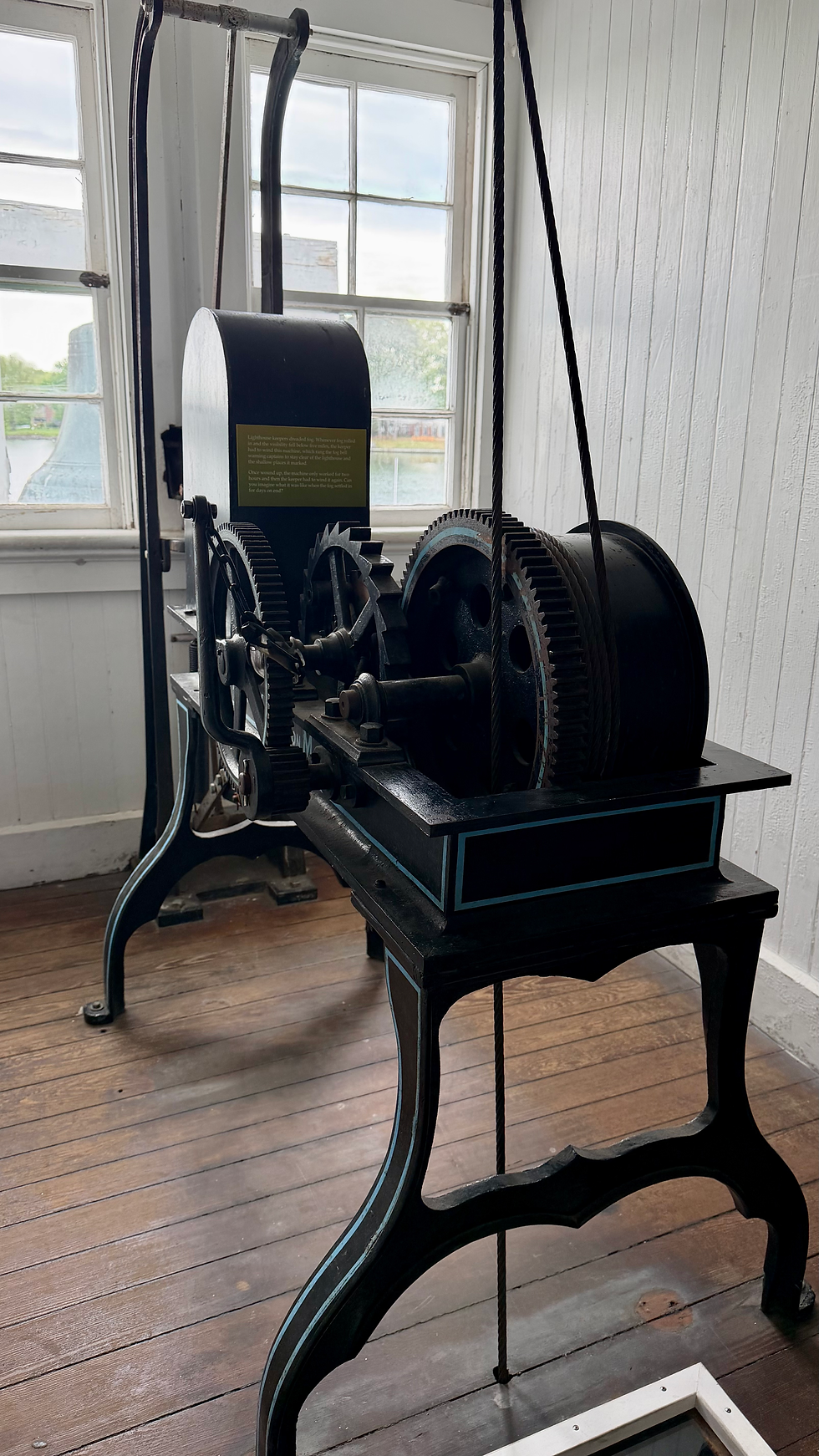
watch a buoy four miles away. When he could no longer see it, he would start the striker. The weight would slowly fall ringing the bell appropriately. At the Drum Point Light one day, the keeper had to go to town on official business. He left his teenage daughter and her friend in charge of the light. As luck would have it, a storm blew in and the girls started the striker. Unfortunately, after two hours with the striker wound down, they found that even the two of them together did not have the strength to crank it back up. The light house was supplied with a hand held bell and a special hammer for use in the event the bell striker failed. The storm worsened and the keeper wasn't able to return for a day and a half. And so, for more than 36 hours, the two girls struck the hand held bell twice every 15 seconds. A man could be proud of children like that!
Being offshore, the only source of freshwater that the lighthouse had was rain water collected from the roof. The Hooper Strait Light had three cisterns like the one below in each of three corners of the house. When it would look like rain, the keeper would go up and clean the roof of pollen, leaves, and especially bird droppings so that any water collected would be "clean". As the rain fell and ran off the roof, gutters collected it and piped it to one of the three cisterns.

By the way, sewage disposal was easy. An outhouse on the light house's lowest deck had a hole in the bottom and human waste simply fell through the hole into the water below and hopefully washed away.
There was no such thing as air conditioning most of the years these lighthouses were in service but Bay breezes helped keep conditions in the light house tolerable. Screens, however, played an essential role as minges in the early spring and mosquitoes later in the season swarmed heavily and bit fiercely. A woodstove provided warmth in the lighthouses sitting room and a coal stove cooked the food and warmed the kitchen. In an effort to capture as much of the fuel's heat as possible, both types of stove had flues with long horizontal runs, a risk we would not recommend in New England.

By the way, as was true in most homes of the day, the lighthouse had a wash basin (seen hanging on the wall to the right of the stove in the photo above) which was used both for the laundry and for folks' weekly baths. My Great Grandmother, Bessie Gregory Hewett, a woman of very small stature, could pick up a full wash basin and carry it through the house without spilling a drop to dump it outside. There aren't many gals with that strength today!
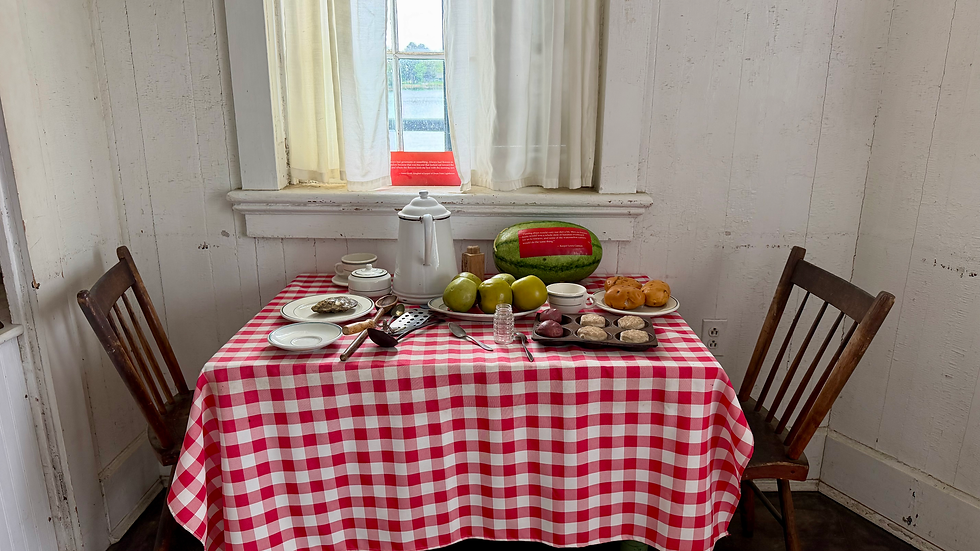
The government paid for and delivered much of the cost of living in a lighthouse (e.g., wood and coal) but lighthouse keepers provided food for themselves and their families. Meals consisted of fresh caught fish, potatoes, eggs, bacon, biscuits and grits. Occasionally, though, a passing food freighter with a crew appreciative of the service the keeper provided would drop a stem of bananas, a watermelon or other floatable foods into the water for the keeper or his family to recover. What fun that would be!

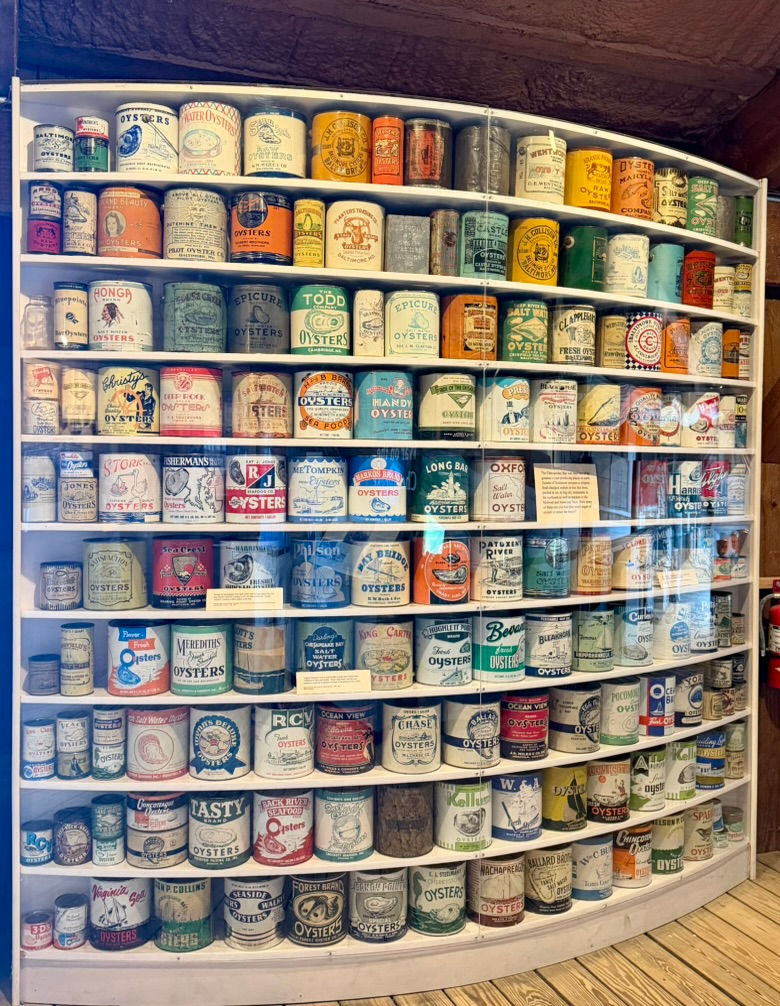
The CBMM had many other exhibits--all well done and all worthwhile. They offered numerous oyster related exhibits with dredges, mechanical tongs, hand held tongs, scuba apparatus, and numerous different types of boats used in this harvest. The display below of oyster cans from more than 150 packers around the Bay gives some sense of how widespread and intense this industry was.
And, who knew this? Oysters were sold to packers by the bushel. A good oyster "shoveler" would shovel oysters into a bushel basket so that they would stand vertically and take up twice the space of oysters just shoveled in and laid flat. Thus, a bushel provided by a good shoveler would have half as many oysters as that provided by someone less knowledgeable or skilled.

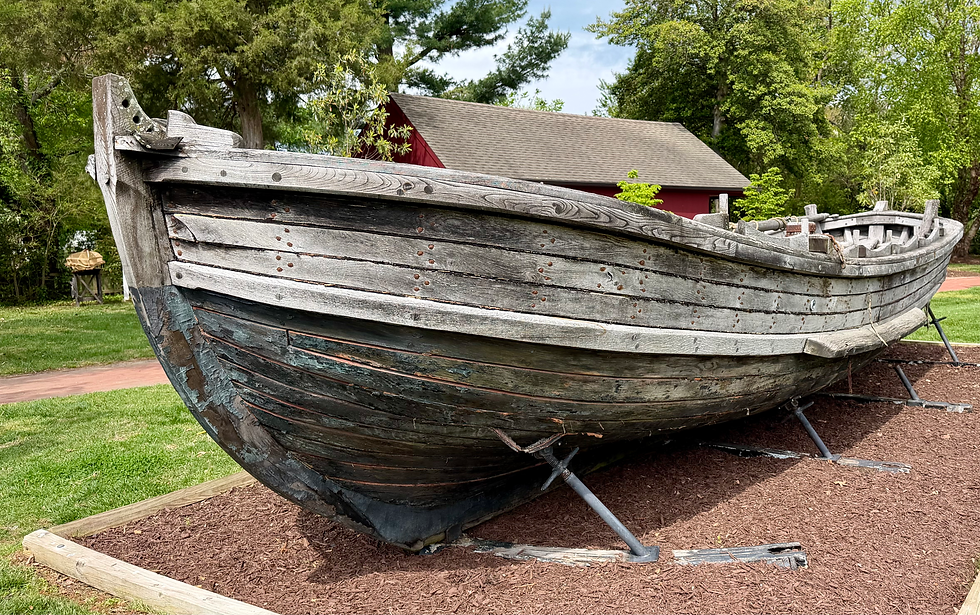
I also enjoyed seeing John Smith's shallop, a small boat used on two major expeditions first exploring the Bay before it was charted. Early explorers typically brought shallops with them on their ships, often somewhat disassembled. When the captain was ready to explore rivers, bays, and estuarys, rather than risk the ship, he would have the ship's carpenter assemble the shallop which could be rowed and sometimes even sailed.
Finally, the museum dedicated an entire floor of one of its newer buildings to a new exhibit that chronicles the life of Frederick Douglas who spent much of his early life in the St. Michaels area and other parts of Talbot County. As most of you will remember, Douglas was born a slave and was separated from his family as a young boy. Somehow, he taught himself to read and write. He entered young adulthood as an endentured servant but, with his free black girlfriend's help, he managed to escape to Pennsylvania and New York and ultimately to England where he became a famous orator, author, and editor dedicated to emancipation. Throughout much of the 1800's Douglas led key organizations in the United States' abolition and desegration movements. In the 1870s, he became the first black man to serve as the US Marshall in Washington, DC., a post that enabled him to visit his roots in Talbot County and even to reconcile with some of the people who had enslaved him as a young man and in his boyhood.


Comments