And If Life Weren't Sweet Enough
Updated: Mar 3
Following up on my last blog, we did, in fact, enjoy the prime rib at the Roland and Mary Ann Martin Marina in Clewiston. A down home spot if ever there were one, we also appreciated the opportunity to have a long chat with our loquacious waiter. He informed us that Clewiston is the hub of the 400,000. acre Everglades Agricultural sugar production area which produces 50% of the nation's sugar. Domino's, Coca Cola, US Sugar, Florida Crystals, and others all have production facilities there. That explains the large homes and other signs of wealth in an otherwise very rural locale.

That got us thinking about growing sugar. Planters tend to grow sugar for three years in a row and then switch to other crops for a year or two. At the start of the first year, they horizontally plant pieces of sugar cane with at least three nodules each. This strategy begins the rotation. In years two and three, cane grows from the stubble left from the prior year's harvest. In year four, the farmer plows the field and either leaves it fallow or plants a rotational crop which might be soybeans, corn, peanuts or rice. Legumes which fix nitrogen especially boost the production of subsequent years of sugar cane harvest. Of environmental interest, most of the sugar cane waste and residues are burned at sugar production plants to create steam and electricity.
I learned much of the above as we left Clewiston headed along the Calloosahatchie Canal toward the Hinckley Sweetwater Marina just outside of Fort Myers. While we cruised, the Admiral googled various sugar topics and entertained the Captain by reading what she found. However, literally thousands (maybe tens of thousands) of the fattest turkey vultures you could imagine interrupted our study of the sugar business. They sat on the banks of the canal gorging on an even larger number of dead fish including invasive species like tilapia and Mayan cichlids. Naive me, I at first thought they were eating fish that errant fisherman had caught, killed, and thrown overboard. However, as the Admiral informed me and later became obvious to even a lowly captain, the number of dead fish simply cratered that explanation. It turns out that a severe Arctic freeze which dropped water temperatures into the forties caused these invasive fishies to succumb. If you're thinking about moving, be sure you know what you're getting into. I found it interesting to think about how all these vultures could possibly know about this incredibly rich and unexpected food source. They must be mimicking Californians who've learned that Texas may be a better place to do business and Wyoming and Montana may be better places to live.

Our 60 mile day took five hours due to navigating through four locks and two bridges that had to open for us.

The next morning we traveled from Hinckley Sweetwater to Sanibel Marina . Decidedly more upscale than any of our recent marina experiences, we thoroughly enjoyed our overnight stay in Sanibel. Thomas McColgan, the former manager, greeted us and helped us get secured. He explained the facilities and gave us directions to the beach.
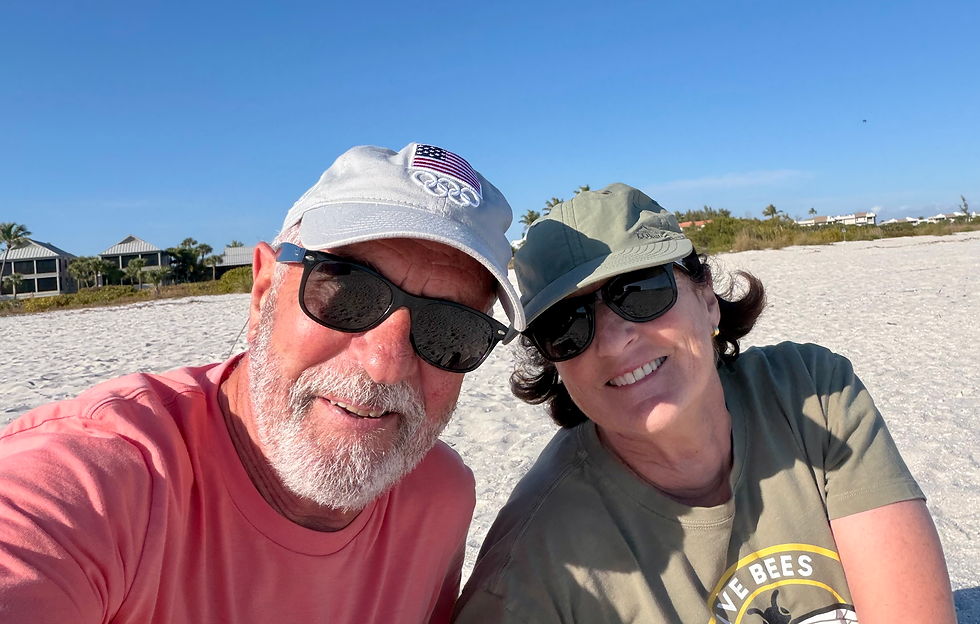
We enjoyed the mile walk over to the beach as well as sitting and watching the birds feed at the edge of the shore.

The next morning, we organized Katahdin to leave for Marco Island but found ourselves at dead low on a neap tide. It seemed smart to delay our departure. What to do? The Admiral suggested waffles and sausage and that, my friends, is why she gets the big bucks. After a leisurely breakfast and a conversation with our new friend, Tom, about water depths at the marina exit, we departed when the water level returned to that of a normal low tide. We had no problem leaving but soon found ourselves in 3-5 foot seas as we headed to Marco. Fortunately, they were just off the bow which, along with our SeaKeeper, kept the amount of roll reasonable. That said, and salty male mariners around the world will understand, it was a sit down day to pee. And in fact, once you stood up afterwards, you wanted to get your pants up very quickly to avoid falling over while hobbled! As we reached Big Marco Inlet and Capri Pass, we found breakers well into the channel on both sides but only big rollers in the middle. We cruised easily through with just enough power to go at the same speed as the waves. Soon we were on the much quieter waters of the Big Marco River.
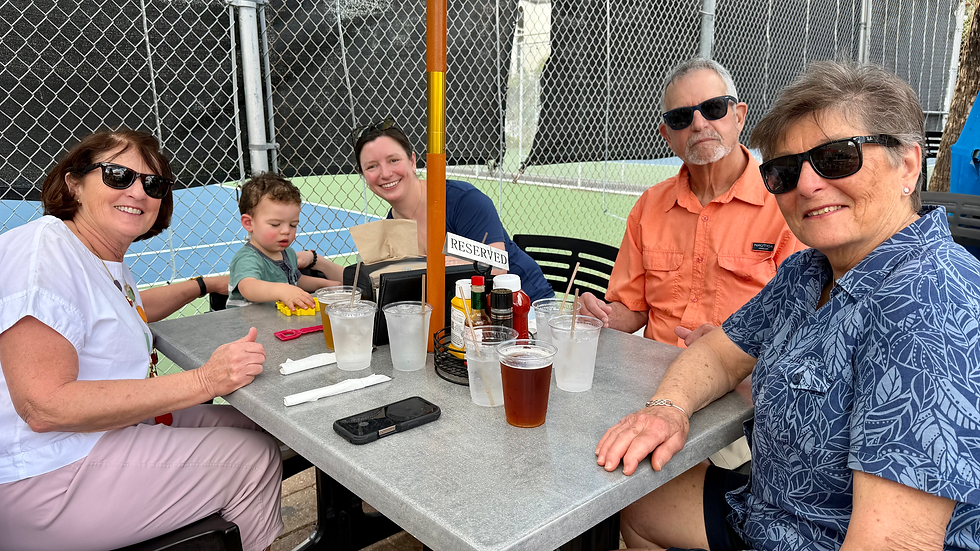
We spent that afternoon cleaning up and grocery shopping as we would have company the next day! On Tuesday, our grandson, Charlie, his Mom, and other set of grandparents came to the boat for a quick visit and then lunch at the next door Dolphin Tiki Bar. We enjoyed the special company. Charlie and I, eventually bored with the lunch conversation, took a long walk together. How special!
That evening, our close friends Rick and Trish Smith came to the boat for drinks and then generously treated us to dinner at their club at Hideaway. Great fun.
We left at 07:00 the next morning for the 115 mile run to Key West. I am very happy to say that the sea conditions had calmed down dramatically and though the waters weren't exactly smooth, we had calm traveling until we reached the notoriously rough patch with tide against wind at the entrance to Key West Harbor so only the last 4 or 5 miles were bumpy and spray washed. We left Marco just at sunrise and were out of sight of land not terribly long after as the sun began to gain a little elevation in the heavens. The sparkle on the water charmed us and reminded me of Island in the Sun, one of my favorite songs.
About 20 miles from Marco, we started running into long strings of crab pots at a diagonal to our course. They would occupy us for the rest of the crossing. Though they are important economic features for fishermen they pose a real nuisance for yachtsmen. In theory, the short spacea between our forward props that pull and rear props that push have cutters that will snip the line and prevent a snarl around our drive unit. For our sake and that of the fisherman for whom each pot and trap represents an investment, we do not wish to test the theory. Watching for each pot string, navigating between pots, and reengaging the autopilot afterward occupied both of us for the rest of the trip.
We also knew that the Key West Express would leave exactly one hour after we did

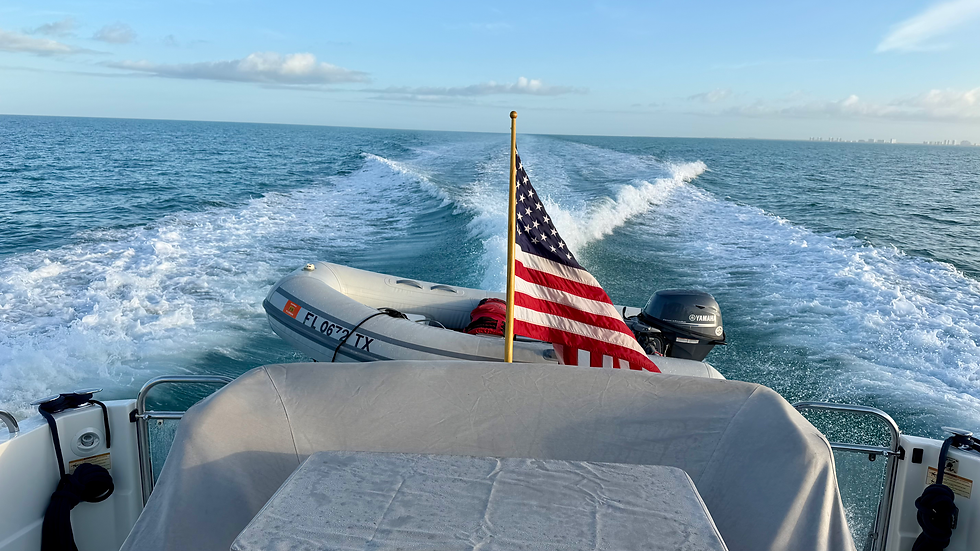
and travel at roughly twice our speed. We had the radar on and our heads over our shoulders wanting to be sure we knew when it was coming. As it turns out, we saw the first hint of it about five miles behind us and watched it steadily gain ground. Their skipper altered course to our starboard a comfortable distance back and passed us about a half mile off. Traveling beside his course, it took about 15 minutes for his wake to affect us but it was quite attenuated by then and no big deal.

Along the route we saw dolphins and one or two whales. The latter were especially exciting but not near enough for us to identify the species. As we neared Key West, we also encountered a magnificent frigate bird. Boy can they soar.
We arrived at Oceans Edge Marina (Lindsey, they don't put the apostrophe in their name) on Stock Island a little after noon time. After refueling, docking, rinsing the salt off the boat, and packing up, our good friend Joe Dyer picked us up and hauled us to 410 Louisa Street. We're going to enjoy our dirt home for two weeks and will then begin the long trip north to Penobscot Bay. I'll write again when we're back on board.


Excellent narrative and photos, as usual. We once had a fish kill along our beach on Maryland’s Sassafras River. 500ft. of dead fish! A call to Fish and Wildlife assured us that these are rare but normal. The ospreys, herons, turkey vultures and eagles cleaned things up in just a day or so.