Not AWOL
Updated: Mar 30
Perhaps you've noticed I've slowed down a bit on my blog posts? As we revisit places that we cruised through not only a year ago but as recently as January, our travels challenge me to find new grist for this mill. Sorry.
In my last blog, I left you as we arrived at St. Augustine in 30+ knots of wind and docking in 2-3 knots of current. Though we successfully docked and secured Katahdin, we did rock and roll a bit for a couple of days. Despite that, while the Admiral had lunch with her childhood friend, Patty Wynn Dayton, I cleaned the salt off Katahdin from the tip of her mast down to the waterline; well, down to the waterline on the Starboard side next to the dock and down to deck level on the port side away from the dock. Standing on the coach roof as the boat rocked and rolled, I felt a bit like a drunken sailor who'd enjoyed a wee bit too much rum. Getting the salt off every surface after a sporty day is quite a procedure with hose, mop, bucket, soap, sponge, squeegee, rags and a surprising amount of scrubbing. At my age, I take special care not to trip and fall on the assortment of cleaning tools--so far successfully. What I can't avoid are the pains and cricks that 2-3 hours of physical labor impose on an aging body. Sigh.
As advertised, both of us had our hair done in St. Augustine with my 88 year old friend from a year ago, Mario, professionally trimming my hair and beard. It's hard to make a silk purse out of a sow's ear but he did what he could and pleased me with the outcome!

Hoping to find Don Juan McQueen's gravesite, the Admiral and I took a long walk that afternoon. We're pretty sure we found the right cemetary but it was gated and we could only imagine that we saw the burial plot, itself. If you're interested in the history of the Spanish, British, French, American Indian and United States' typically unfriendly interactions in north Florida and south Georgia, you might enjoy the novel, Don Juan McQueen, by Eugenia Price. The Admiral is not much of a drinker at this stage of her life and almost never imbibes during the day. She surprised me by requesting a mid afternoon glass of wine at the Casa Monica just across the street from the Lightner Museum. I rose to the occasion and, in a lifetime first, ordered an espresso martini. Too sweet for me with its kahlua, I suspect that will be my one and only espresso martini of a lifetime. But, I survived!
Other than the Admiral's reported wonderful lunch with Patty, by far the best part of our St. Augustine visit were the birds who inhabited the St. Augustine Marina at night. Walking back to the boat in the dark after dinner, we again saw more than a half dozen Black Crowned Night Herons, a Great Blue Heron, and Great White Egret. With my trusty iPhone, I managed to catch a few pics--even in the dark.


In much calmer going, we left St. Augustine early on Saturday and trundled through the lowland marshes up to Fernandina on Amelia Island. That 60 mile day rewarded us with a number of spectacles from the natural world. Now far enough north, we enjoyed again seeing flocks of White Pelicans and watching them gulp fish as they swam. Clearly well racially integrated, they intermingled with Brown Pelicans who catch their prey by diving on them from the sky. We also enjoyed watching a Tricolor Heron and Little Egret fishing side by side together. Several Oyster Catchers popped up along our path and just as we were marveling over that, two Wood Storks flew right over the boat. Wow! Not to be outdone, Dolphins collaborated to herd fish into the shallows where they (the dolphins) enjoyed only the freshest sushi for lunch. Of course, we also saw Great Blue Herons, Little Blue Herons, a flock of Little Egrets in a loose V headed north, Great Egrets, Cormorants and the first Canadian Geese we've seen since getting on the boat in mid January.

Tired from our St. Augustine adventures and the trip to Amelia Island, the Admiral took a long afternoon nap while I walkd through town. Fernandina is an upscale tourist town--nicer and more refined than Bar Harbor but not quite up to the standard of Holland, Michigan. Not wanting to fight the crowds, we enjoyed an early sushi take out dinner and went to bed early.


On Sunday, we traveled from Fernadina to Morning Star Marina at Golden Isles. Once there, on a hot, humid, sultry afternoon, I again cleaned salt from the outside of the boat while the Admiral did the inside and we enjoyed a light supper at the marina restaurant.

The next day. Our trip from Golden Isles to Savannah offered much of the same bird and dolphin life that engaged us on our trip from St. Augustine to Fernandina two days before (Are they all heading north with us?). In addition, however, we enjoyed a close up view of a pair Bald Eagles that showcased how much larger the female is than the male. Boys, know your place! Kingfisher flitted back and forth in front of us and, especially at the "Gate", laughing gulls trailed us hoping to find stunned fish in our wake. A choppier day than the previous two (winds 10-15 with 1-2 foot seas), we rolled a lot when crossing inlets but never for long enough to justify starting the generator and SeaKeeper.
We arrived in Savannah with the tide at full ebb adding to the flow of the Savannah River. Getting from the river into the marina definitely captured my attention as I navigated the narrow entrance at a slight angle to the current and then, at the last minute, spun 90 degrees to squeeze through the entrance into water with a bit less flow.
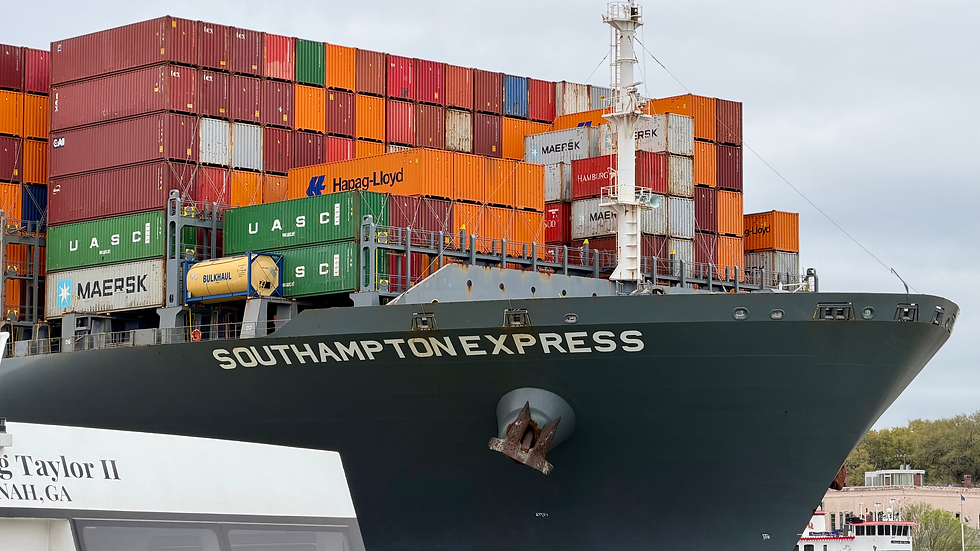
One of the amazing parts of life next to the Savannah River is watching the container ships come and go. The fourth busiest port in North America and second busiest on the US east coast, these behemoths thrum in and out of port loaded to the max almost continuously. Please enjoy the pictures below:



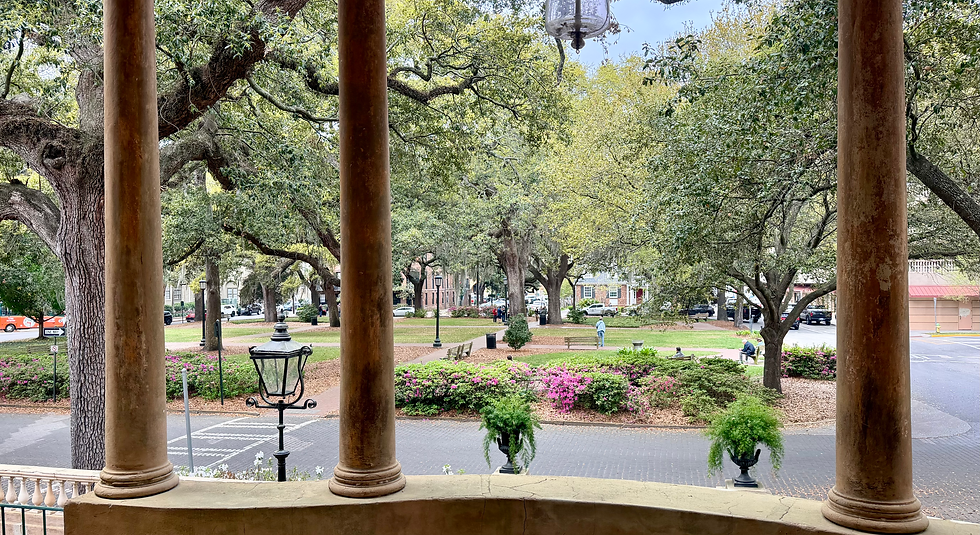
Yesterday morning, we both enjoyed massages and, in the afternoon, tried to visit the Owens-Thomas House and Slave Quarters. Due to our need to grocery shop, we were unable to wait for a tour but we did enjoy the grounds and some of the history portrayed there.
HOLD THE PRESSES: The Admiral has just told me that she doesn't like the wind forecast for today--not so much for our short passage but for the rather exposed marina where we were planning to spend the afternoon and evening. She is in the process of getting us a reservation for the Owens-Thomas House tour today as I write this. I am going to hold off on posting until I see how this plays out.
Alright. So, we did revisit the Owens-Thomas House and Slave Quarters and happily participated in a provocative hour long tour. Here are a few interesting facts:
Constructed between 1816 and 1819 for Richard Richardson, a banker and international trade merchant.
Architect: 22 Year Old William Jay--perhaps the first professionally trained architect to practice in the US.
Neoclassical Design--Built by a Combination of Free and Enslaved Labor
Running Water on All Three Floors--14 Years Before the White House Had Indoor Plumbing
Tabby Construction--See Below
Richardson Only Owned It Three Years. During that Time, Two Children and His Wife Died; Most of Savannah Burned; Yellow Fever Scourged North Georgia and the Financial Collapse of 1819 Ruined Richardson's Finances
George Owens Bought the House from the Debtor in Possession in 1830 and His and His Son-in-Law's (Dr. James Thomas) Families Would Own it Until 1950 When His Spinster Granddaughter Donated It and a Large Sum of Money to Support It to the Non-Profit Telfair Academy.
During the Time of Enslaved People, Between 7 and 14 Enslaved Lived At This Urban Home and Served Their Enslavers.
Owens Was an Alderman and then Mayor of Savannah before becomning a US Representative. In the Latter Role, He Strongly Supported the Gag Rule Which Prevented Abolition Legislation from Reaching the Floor.
James Thomas Became a Highly Regarded Research Physician and Advocate for Public Health.
The Marquis de LaFayette Quartered Here During His Tour of the US in the mid 1820s.
I'll let the pictures below add to the story.




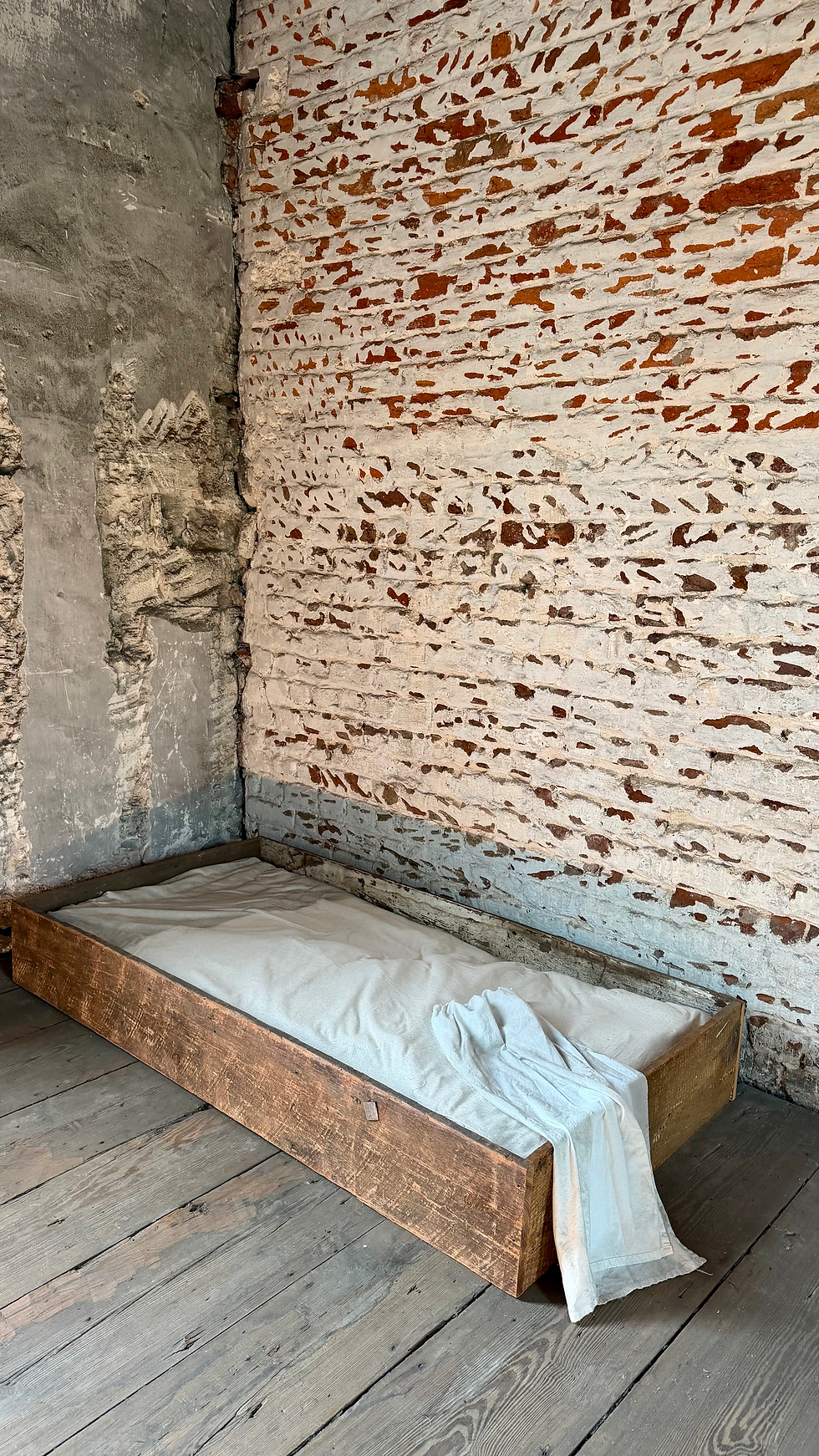
The Owens-Thomas House as but one example, Tabby played a huge role in the construction of pre- and post-revolutionary homes and buildings in this region. Introduced to America by Spanish settlers in the sixteenth century. builders in Florida, Georgia, and South Carolina where brick and stone were not available along the sandy shores. A combination of sand, burned oyster shells, water, ash, and whole oyster shells. Settlers poured it into forms to create concrete like walls for fortifications, homes, and commercial, industrial and religious buildings. A strong, durable material, it protected against attacks, fire and insects as well as the weather. Sophisticated builders often applied a thin coat of lime stucco over it to protect it from water.


Excellent. Ask me about lime one day.