Progress and A Lot of Learning
- Chuck Hewett
- Mar 8
- 4 min read
Updated: Mar 10
Since our last report, we traveled from Marco Island to Naples where we stayed several nights and then on to Sanibel Marina onThursday and South Seas Resort at the north end of Captiva on Friday.. All three short cruises were exposed and rough enough to warrant the SeaKeeper for the Admiral. It really steadies the ride and flattens out what might otherwise be a bit more rock'n roll.
In Naples we took several walks and bike rides to enjoy the upscale community and enjoyed a very pleasant evening with friends Dick and Pat Bottoff at the Persian restaurant, Bhabha. We also successfully installed a new TV in the salon and had Manuel
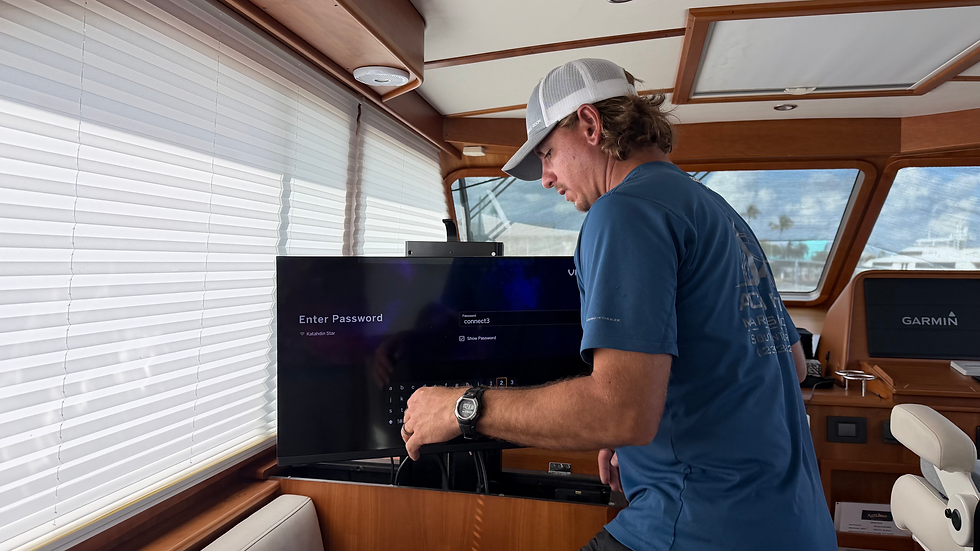
from Florida Hull Cleaning clean the hull in an effort to rid ourselves of the marauding band of pistol shrimp. Had I written this blog the evening after the hull cleaning, it would have disappointed. Though perhaps somewhat reduced in number, they continued to fire their weapons long after Manuel had finished. However, it appears that Thursday on our 2.5 hour trip from Naples to Sanibel we managed to outrun them. All quiet on the western front! BTW, the sound they make when they do fire reaches up to 219 decibles. For comparison, a jet engine produces 140-150 decibles at close range during takeoff.
Waiting for various workmen occupied much of my time in Naples. Why do they never come when they say they will? I did get to enjoy the pre-dawn hours though and managed to greet an evening visitor. I also had to carefully manage the quality of my


outside work as the fellow above kept a careful eye on me from his perch on the adjacent piling. Naples' heavy tourist area and the Tin City Dock and Riverwalk lay a half a mile or so upstream from us. Eight aging Hinckley Picnic Boats passed down and back by us several times a day carrying tourists pretending to be Rockefellers, Carnegies and Mellons--or maybe Gateses, Zuckerbergs and Musks?

Thursday afternoon at Sanibel, we joined a guided trolley tour of the 7000 acre JN Ding Darling National Wildlife Refuge. To be honest, I expected little but our guide, Kathy, pleasantly surprised us. Here's a partial list of the many species we saw during our hour and a half several mile drive:
White Ibis
Nesting Osprey with Three Chicks and Dad Bringing Home the Bacon
Bald Eagles
Manatee
White Pelicans
Brown Pelicans
Reddish Egret
Dolphins Chasing Jumping Mullett
Great Blue Heron
Pied-Billed Grebes
Willet
Kingfisher
Horseshoe Crab
Oysters
Iguana.


Maybe even more interesting were Kathy's stories about Hurricane Ian which landed on Sanibel in 2022. You may remember that the category 5 storm stalled over Sanibel and Fort Myers Beach for 8 hours and raged with 150+ mile per hour winds and a 13 foot storm surge. This storm surge left salt water in low lying areas for days that followed which drowned mangrove and other vegetation all up and down Sanibel, Captiva and adjacent islands. Much as fires do in the Rockies, Sierra, and Alaska, the hurricane killed the overstory and made it possible for dormant young to sprout up. You can see signs of this regeneration in many places but dead mangrove both standing and fallen continue to dominate huge swaths of low lying land. We also saw countless dead cabbage palms with their tops blown off. Ian destroyed numerous homes and other buildings and infrastructure. Reconstruction is on-going but numerous empty lots and scarred natural areas remain. Kathy told us that some life-long residents will never return. The PTSD associated with the storm and its aftermath simply overwhelms them.
Mangrove, of course, comprise a critical ecosystem that provides many benefits. In this part of Florida, they provide a nursery for more than 100 species of fish. That attracts dolphins and a variety of sharks who brave the shallow waters to dine on the marine equivalent of veal and lamb. The mangrove also serve as barrier islands and slow and reduce the rush of storm driven water onto the mainland during major storm events. Interesting to me, oysters colonize the roots of red mangrove. Each oyster filters 50 gallons of water per day and together they clarify otherwise silty water making it possible for osprey, herons, pelicans and other birds to see and select their various meals. The oysters' clarifying filtration aIso makes it possible for sea grass to grow (the clearer water let's enough light through) which in turn attracts and provides food for manatees. It's also curious that red mangrove carry out reverse osmosis in their roots so that no salt is taken up. Black mangrove, on the other hand, take up the salt water and exude the salt through their leaves. Native Americans and early settlers used these leaves as a readily available source of seasoning for their food.
During the tour we also learned a bit about Calloosa Indians. They left shell middens in the refuge which archaeologists treasure for the trove of discarded tools and other things that they find in these "trash" heaps. Ian moved the middens around so they are currently not accessible while the archaeology community sifts to see what artifacts might have. been dislodged.

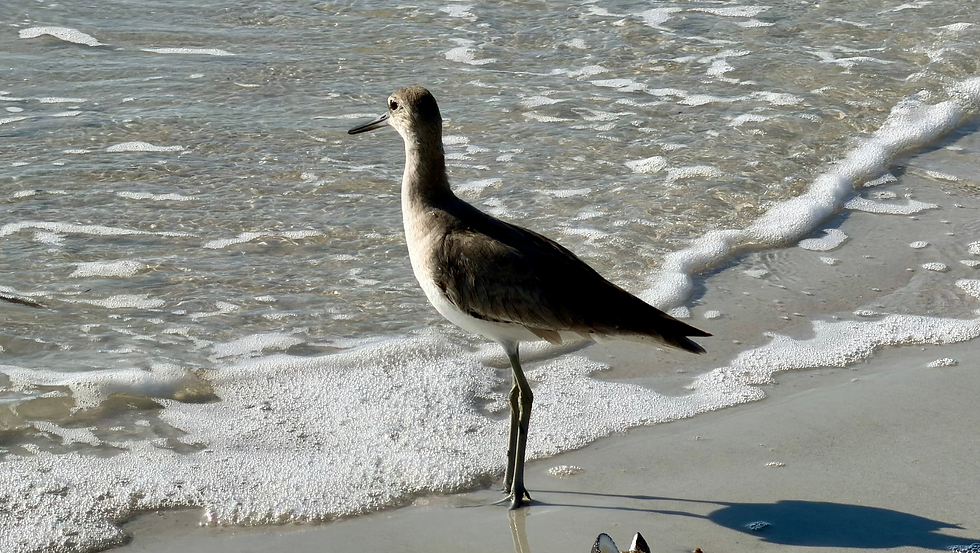
Friday morning before we left for Captiva, we rode our bikes to the beach at Sanibel Lighthouse where we enjoyed seeing many pips, a few of whom I was lucky enough to catch on my trusty iPhone:


We chose the slightly longer but easier to navigate path from Sanibel Marina to South Seas Resort and went outside along the Gulf before entering back "inside" through Redfish Pass.
At South Seas, we are bike riding, enjoying various pools, floating around and around on their lazy river, and enjoying good restaurant meals. Today we will make a provisioning run and then head to the beach--our last day this trip on Florida's West Coast.


Comments